
Interpretation OF Liver Function Test (LFT): Normal values, High & Low Values Explained
1.What is LFT (Liver Function Test)?
LFT are liver biochemical tests which are useful in evaluation and management of patients with liver disorders.
These tests have the potential to identify liver disease, distinguish among types of liver disorders, gauge the severity and progression of liver dysfunction and monitor response to therapy.
No single test can accurately assess the liver’s total functional capacity.
These tests lack sensitivity and specificity for liver injury; a battery of tests must be used to evaluate the liver.
2 .What tests are included in an LFT?
3 .How to Interpret an LFT report?
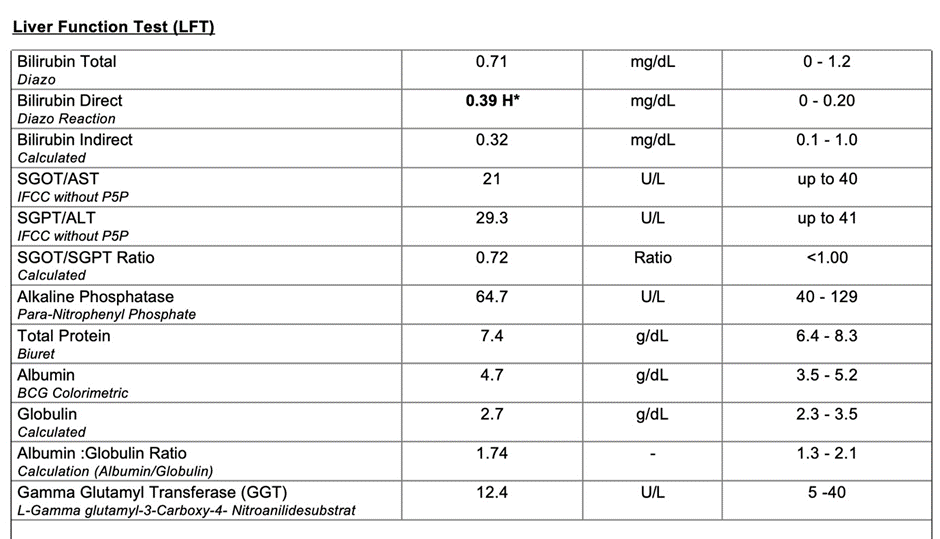
Bilirubin: Breakdown product of heme (Hemoglobin). About 4mg/dl body weight of bilirubin is produced daily.
Bilirubin includes:
- Direct bilirubin
- Indirect Bilirubin
Normal value of Serum Bilirubin is between 1.0 and 1.5 mg/dl.
Normal value for the indirect component is between 0.8 and 1.2 mg/dl.
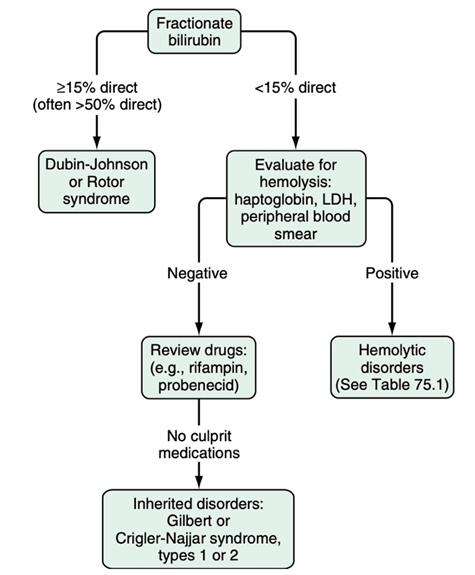
If direct fraction is less than 15% of the total, the bilirubin can be considered to be entirely indirect.
3 .How to evaluate isolated elevation of the serum bilirubin?
Amino-Transferases (AST/ALT/SGOT/SGPT)
AST (SGOT) found in cytosol and mitochondria, is widely distributed throughout the body; it is found in order of decreasing concentration, in liver, cardiac muscle, skeletal muscle, kidney, brain, pancreas, lung, leukocytes and erythrocytes.
ALT (SGPT), a cytosolic enzyme also found in many organs, is present in greatest concentration by far in the liver, and more specific indicator AST of liver injury.
< 30 U/L for Normal values of Aminotransferases men and <19 U/ L for women
Serum levels of ALT decreases with age, independent of sex, alcohol use, BMI, Diabetes Mellitus, Serum Triglyceride levels.
A serum aminotransferases level below the lower limit of normal is of no clinical importance.
Causes of raised Aminotransferase level
1.Autoimmune Hepatitis
2.Chronic viral hepatitis
3.Medication and toxins
4.Wilson disease
5.Celiac disease
6.Hyperthyroidism
7.Acute bile duct obstruction
8.Alcohol associated liver injury
Alkaline Phosphatase (ALP)
ALP applies generally to a group of isoenzymes distributed widely throughout the body.
Patients with blood group O and B have elevations in serum ALP levels caused by release of intestinal ALP after a fatty meal.
Normal Value of Serum ALP varies with age. Male and female adolescents have serum ALP levels twice the level seen in adults; the level corresponds with Bone growth and the increase in serum is in bone ALP.
A low serum ALP level may occur in patients with Wilson disease, hemolysis.
GGTP
GGTP is found in the cell membranes of a wide distribution of tissues including liver, kidney, pancreas, spleen, heart, brain.
Primary use of serum GGTP levels is to identify the source of an isolated elevation in the serum ALP; GGTP is not elevated in bone disease.
GGTP is elevated in patients taking antiepileptics, including phenytoin, carbamazepine, valproic acid and barbiturates, as well as some drugs used in antiretroviral therapy.
Albumin
Most important plasma protein.
Average adult produces approximately 15g/day and has 300 to 500 g of albumin distributed in body fluids.
Half- life of albumin is 14 to 21 days.
Serum albumin is an excellent marker of hepatic synthetic function in patients with chronic liver disease and cirrhosis.
4 .Can fatty liver cause abnormal LFT?
Yes, fatty liver causes elevation in ALT and /or AST. However, LFTS can also be completely normal despite fatty liver or advanced fibrosis. Therefore, Normal LFTs do not completely exclude significant liver disease.
5 .Can LFT detect cirrhosis?
LFTs can provide clue about cirrhosis but for definitive diagnosis we need supportive test.
6 .How long does it take for LFT to become normal?
It depends on the underlying cause. LFTs may improve within days to weeks after removing the cause.
7 .When should you see a gastroenterologist?
You should consider medical evaluation at GastroHeal Liver & Digestive Centre – Dr. Amit Kumar if you have persistently abnormal LFTs, jaundice and significantly elevated liver enzymes, unexplained itching, abdominal swelling, dark urine, pale stool, recurrent abdominal pain or risk factors for liver disease such as alcohol use, obesity/ diabetes, viral hepatitis or hepatotoxic medications use.
